

How To Draw A Human Base
Muscles have the astonishing characteristics of being able to curve, stretch and relax. Each of them perform a specific function depending on where they are in the trunk. Just in general, they are in charge of transforming the energy sent from the nervous organisation into move.
I have taken the opportunity to report them all – where they are placed, their functions, their shapes. Notwithstanding, with so many muscles in the man trunk, I accept decided to only focus on the nearly of import ones for when we describe.
The learning process may be a bit confusing at times, so I recommend using your own separate sketchbook to accept notes in your own time. There is no meliorate mode to acquire!
- The Muscles of the Torso
- The Muscles of the Artillery and Legs
The Muscles of the Torso
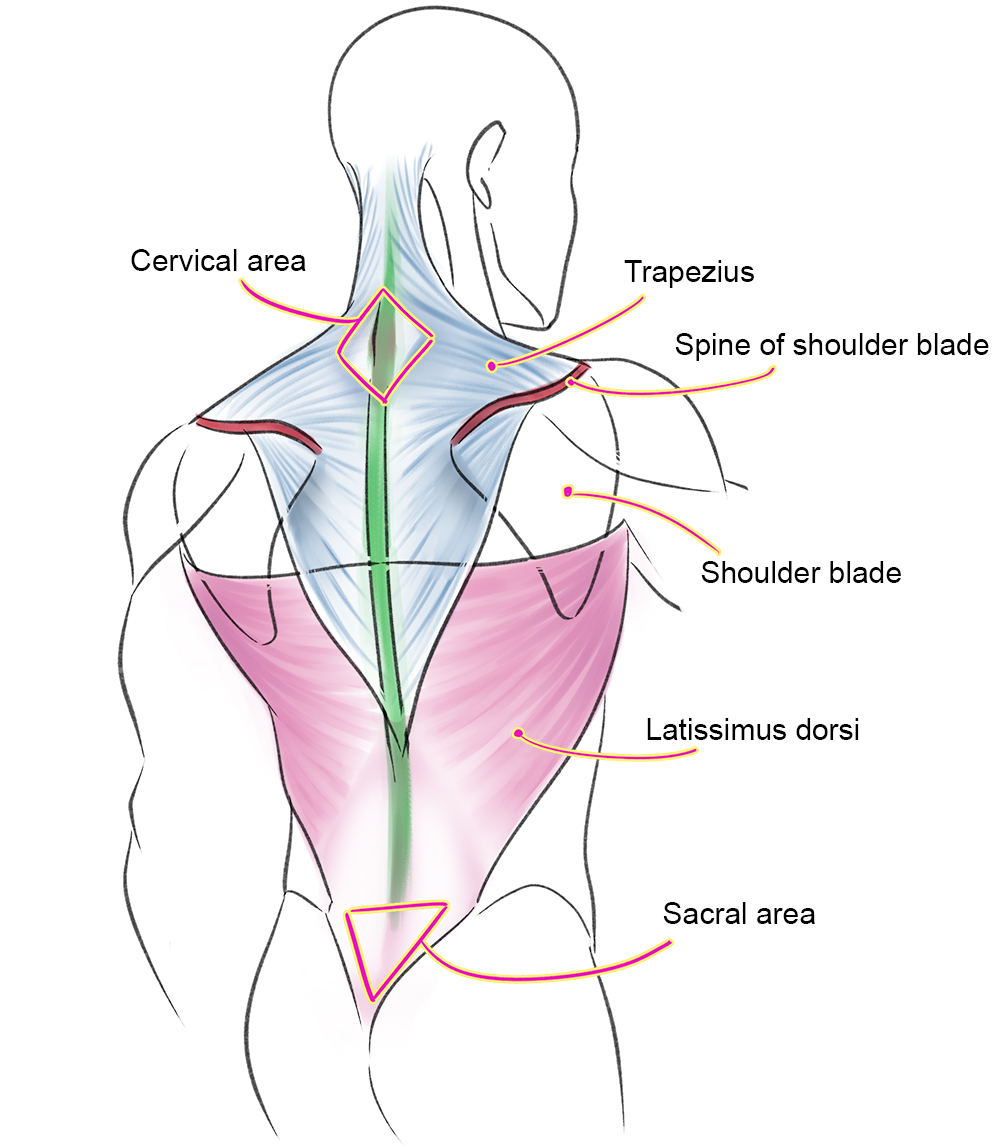
The trapezius is located on the back. This is the muscle that extends across the upper part of the torso, and it helps to move the scapula.
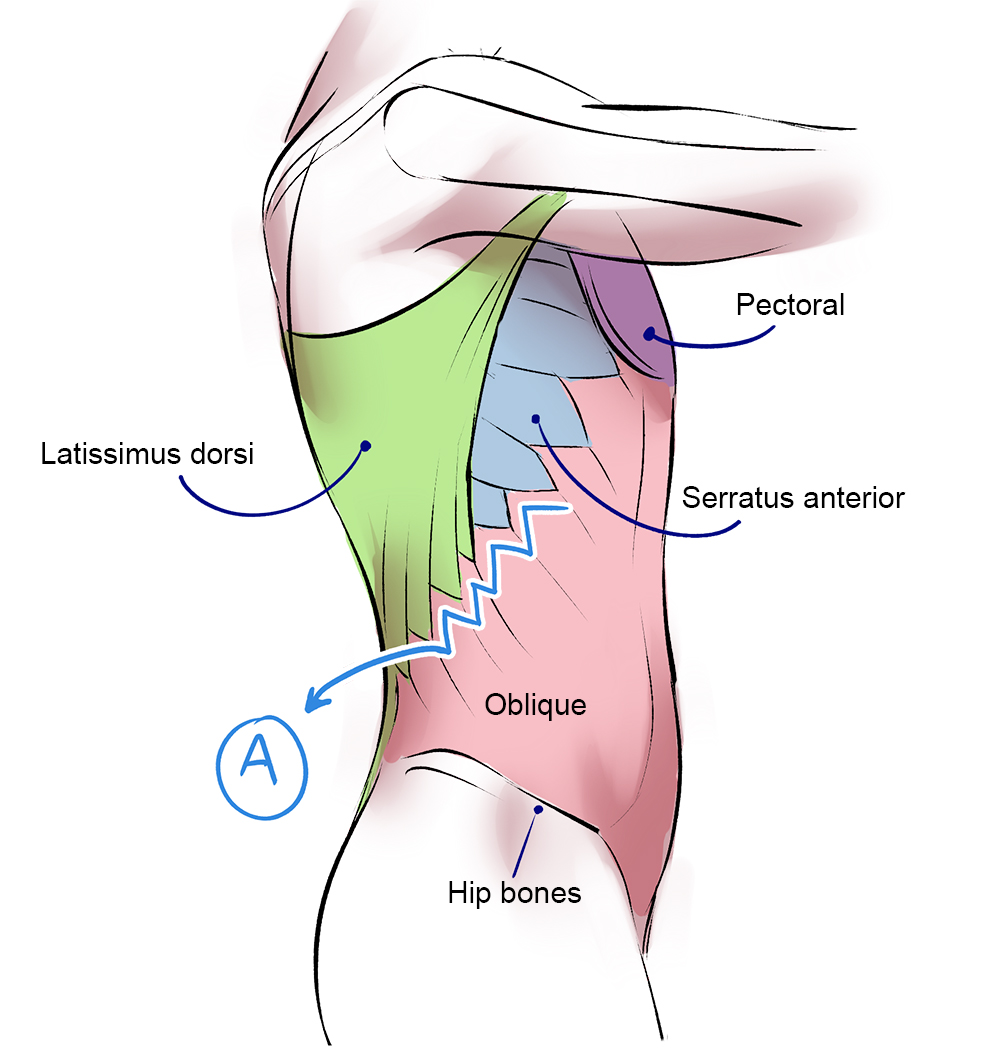
The latissimus dorsi (dorsal) muscle is located in the lower part of the trunk. Information technology is broad and apartment, covering a large part of the spine all the mode to the sacrum.
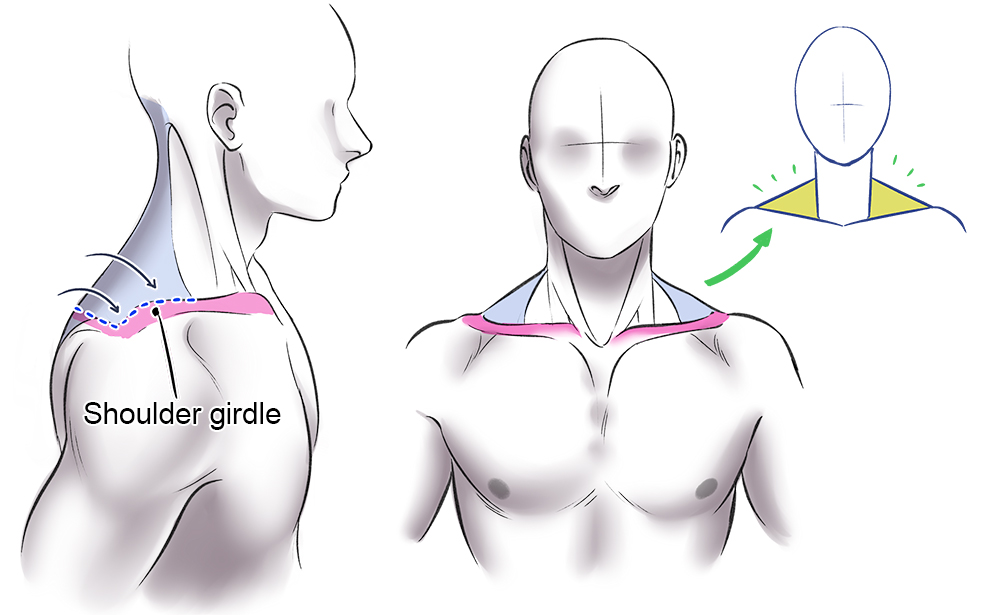
The trapezius enters the spine of the shoulder blade and the collarbones (or clavicles). When viewing from the front, this muscle draws the outline between the cervix and the clavicles – to remember them, think of them as a couple of triangles!
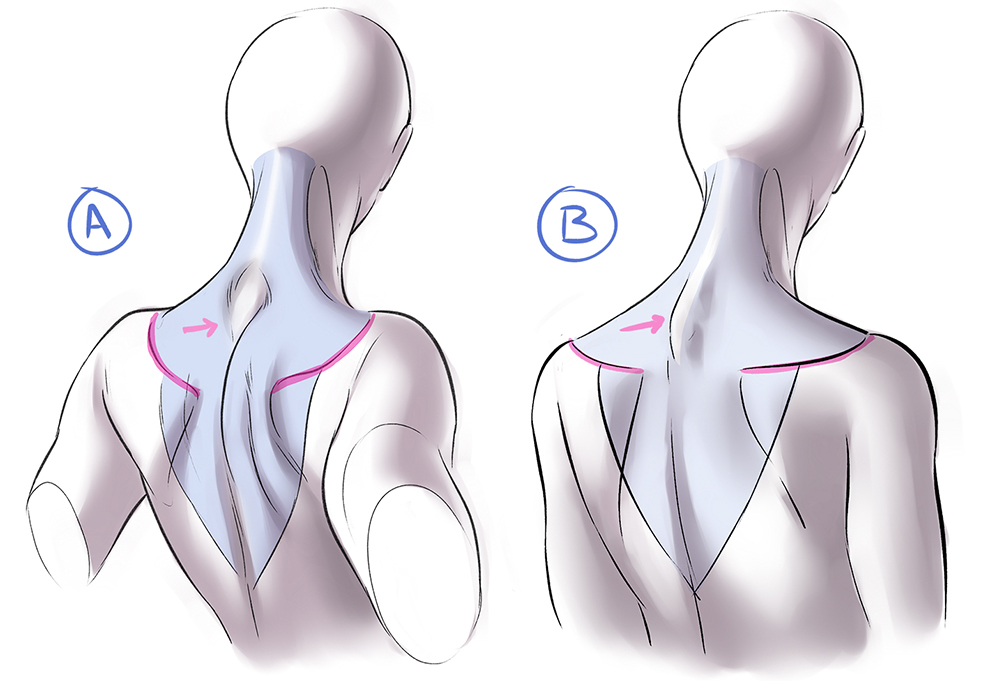
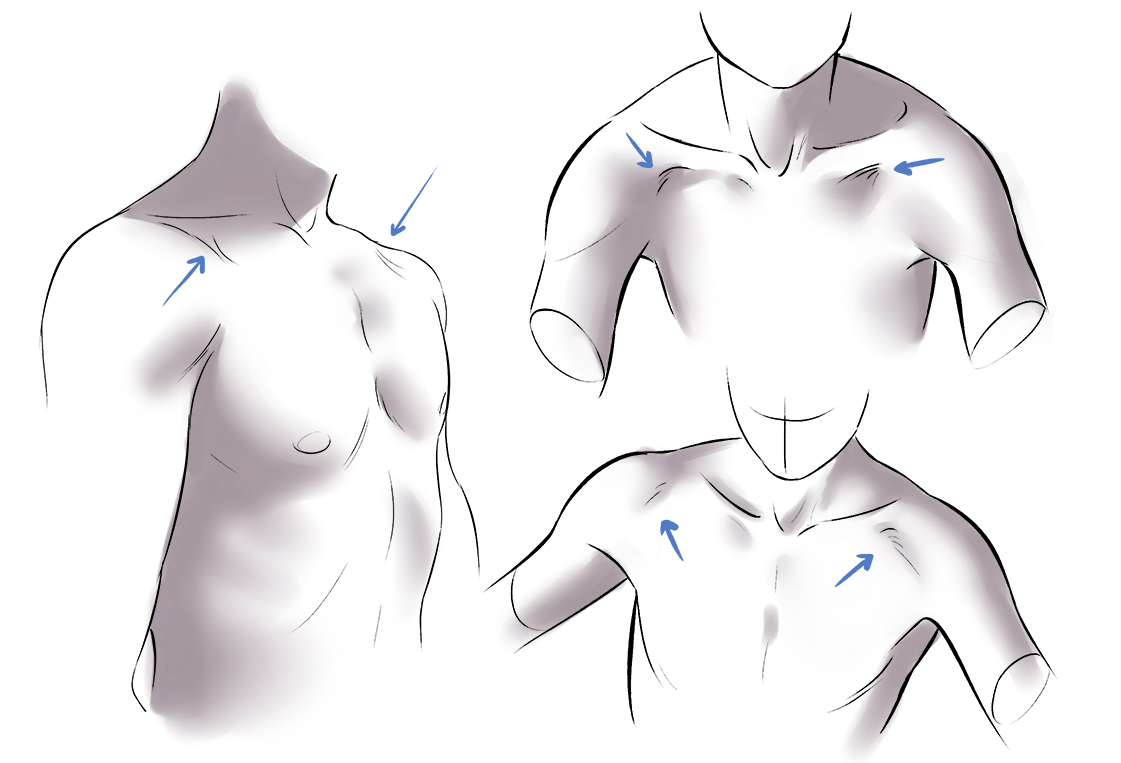
In the cervical expanse, yous will usually run across a small indentation. It becomes visible when you lot squeeze your shoulder blades together (A). When the muscle is relaxed, y'all may see some of the bones in the spine sticking out (B).
On the other hand, the dorsal muscle enters the humerus below the armpits, allowing the arms to extend and contract. It's a flat muscle which isn't easily visible from the front, except for a small part under the artillery.
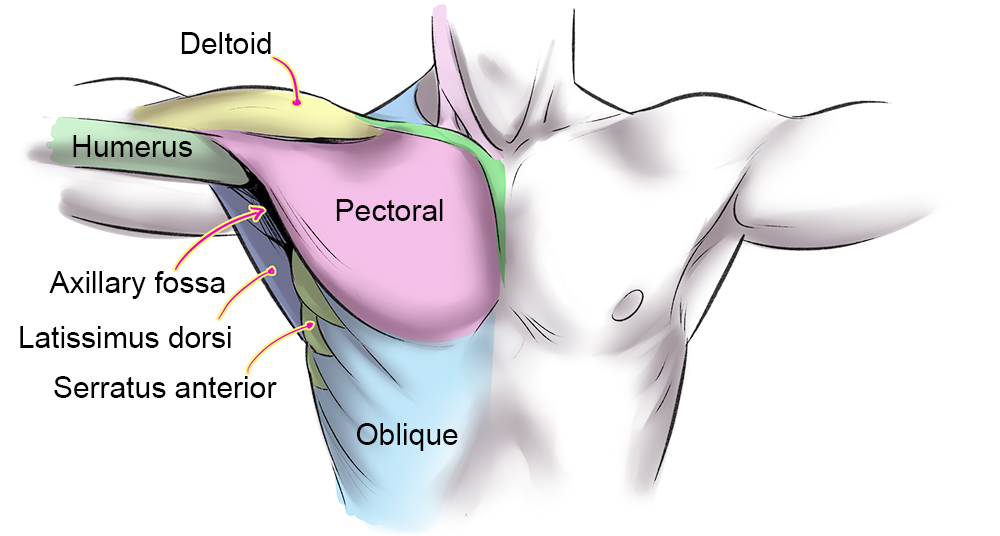
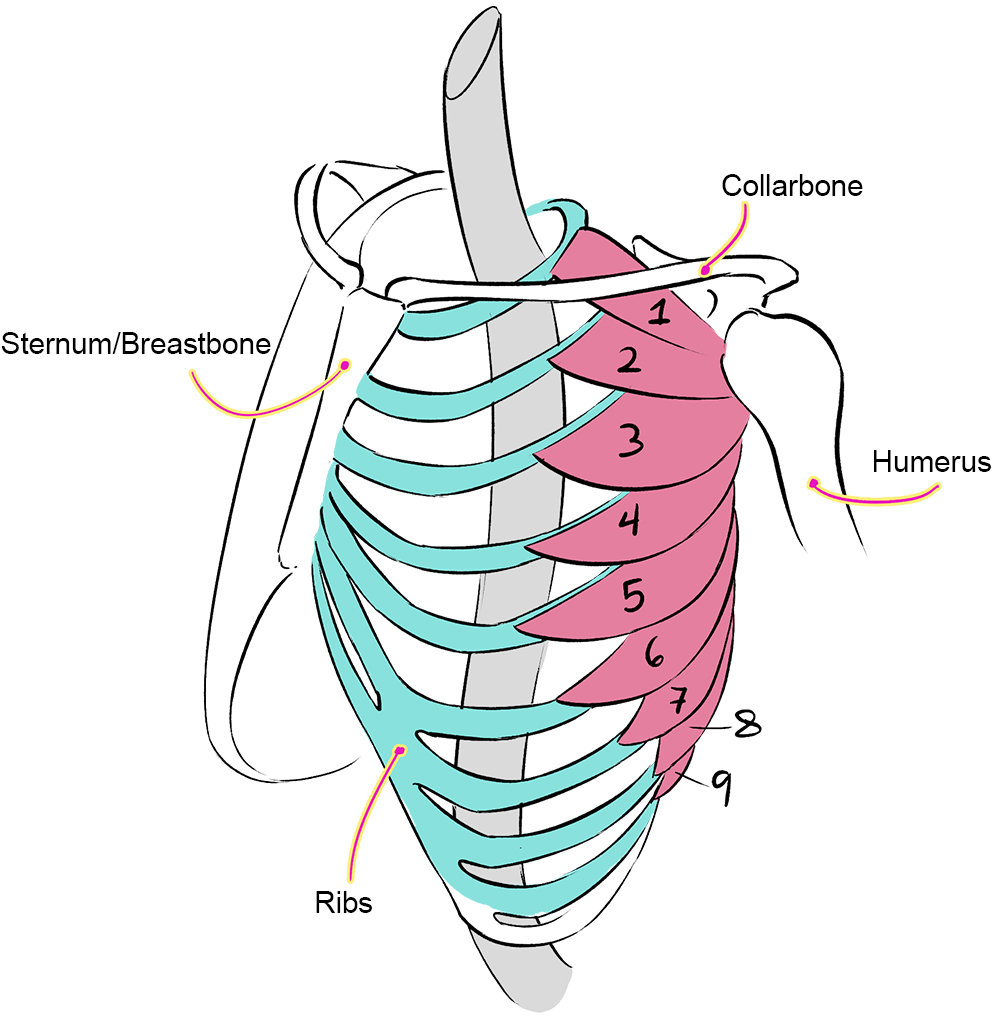
The serratus anterior is pulled from the nine upper ribs into the scapula, providing stability and mobility to the bone. This musculus is shaped like a fan, merely we tin can only see a office since it is overlapped by the pectorals, the obliques and dorsals.
The pectorals are framed betwixt the collarbones and the breastbone, the ends are attached to the humerus to allow the artillery to rotate (i of its purposes).
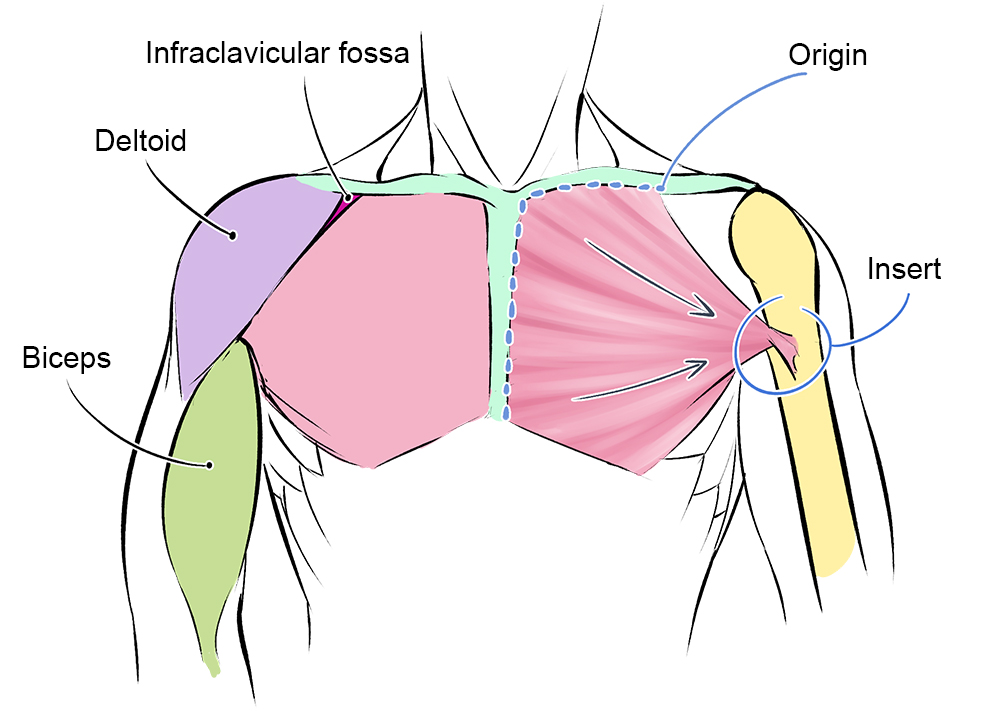
The infraclavicular fossa is the infinite between the pectorals and the deltoids. It is a very small detail, but yet quite useful to identify the gap betwixt the muscles.
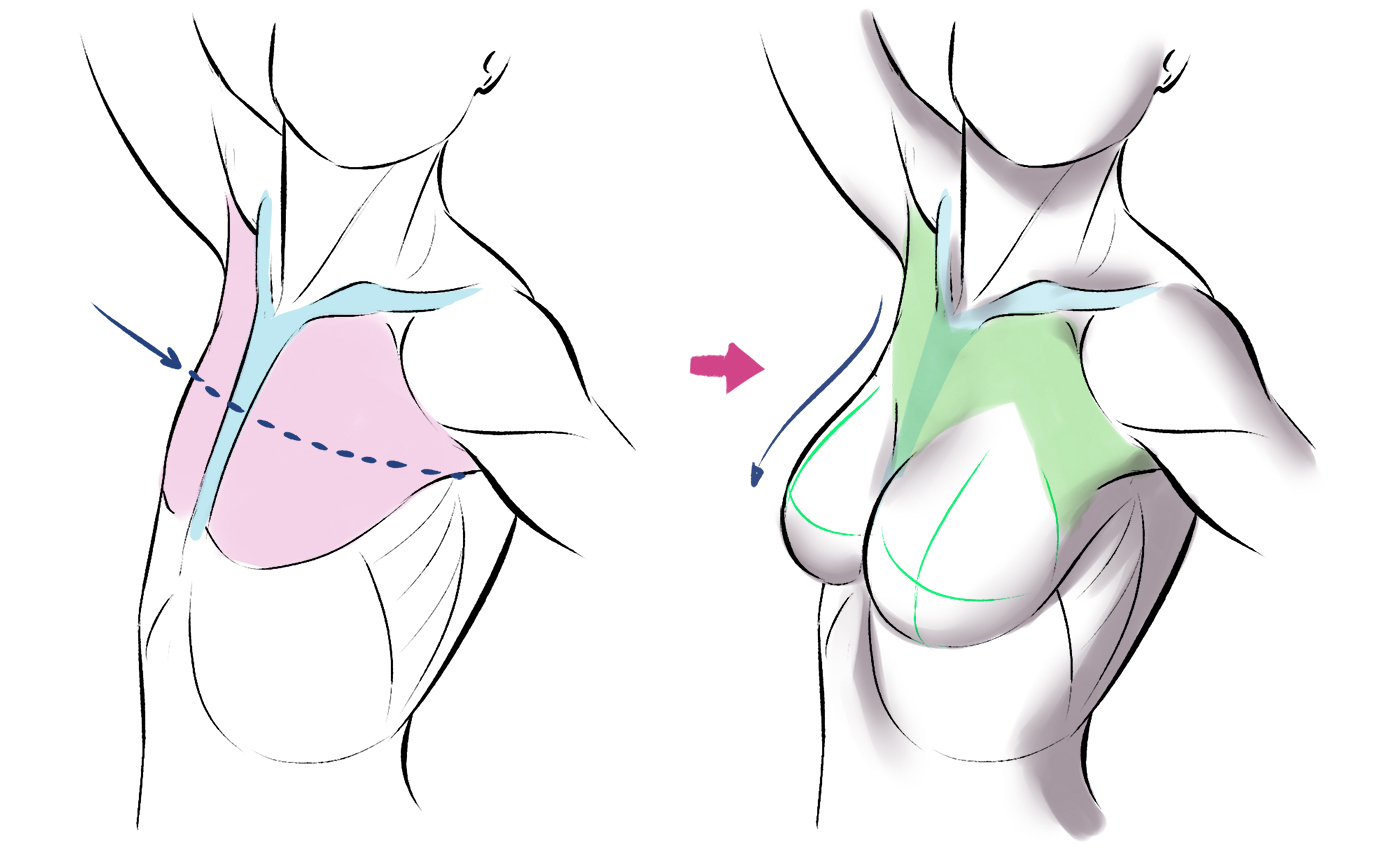
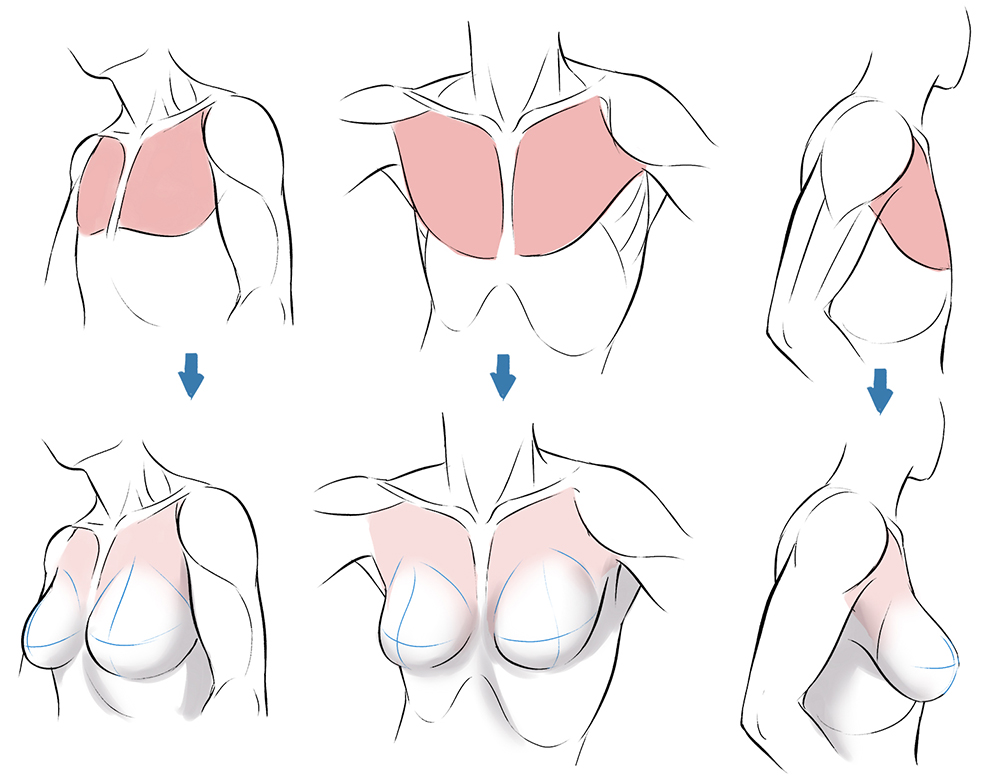
In the female person torso, the pectoral muscles are constitute backside the mammary glands. The breasts practise not offset immediately from the collarbones (a common mistake). The chest is flat at the top, but the breasts get-go from more than or less the middle of the pectorals, equally you tin can see in the following examples:
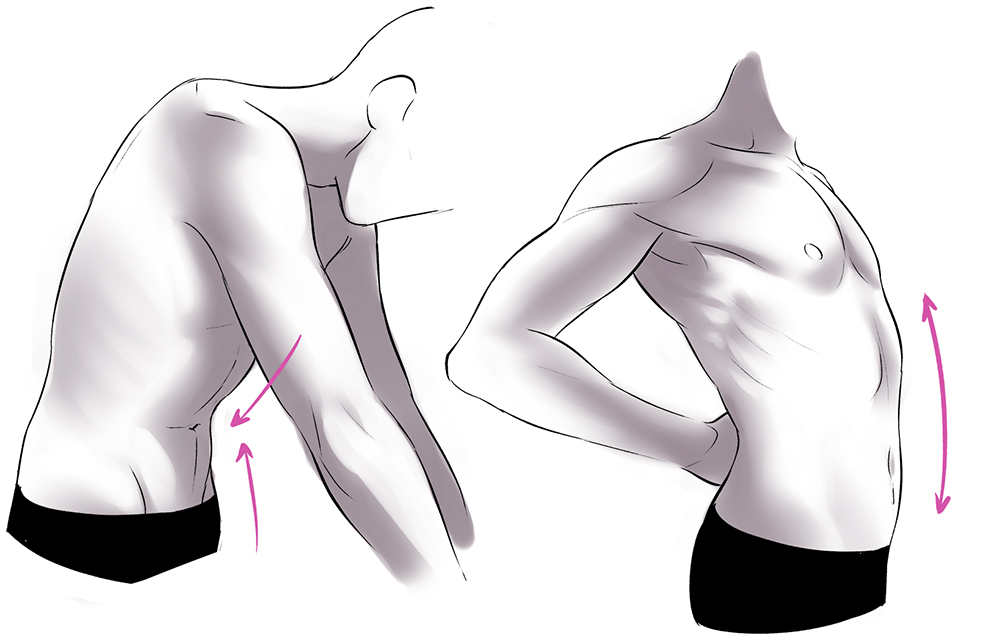
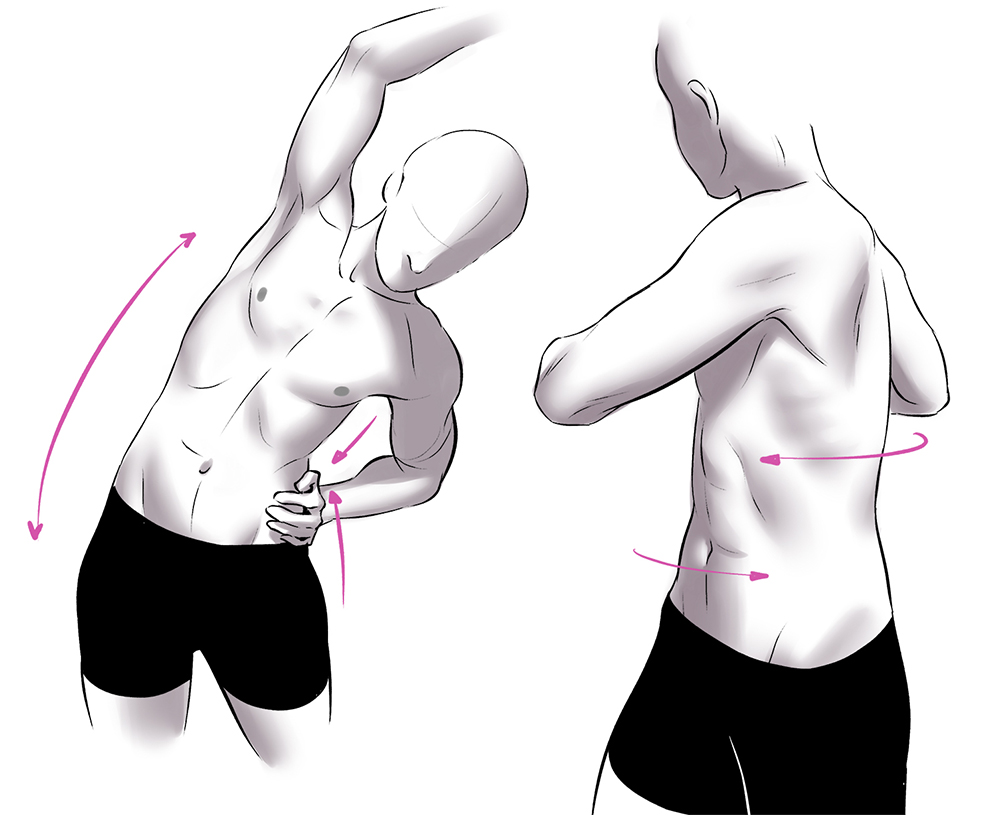
The muscles of the belly are in charge of angle, tilting and rotating the trunk.
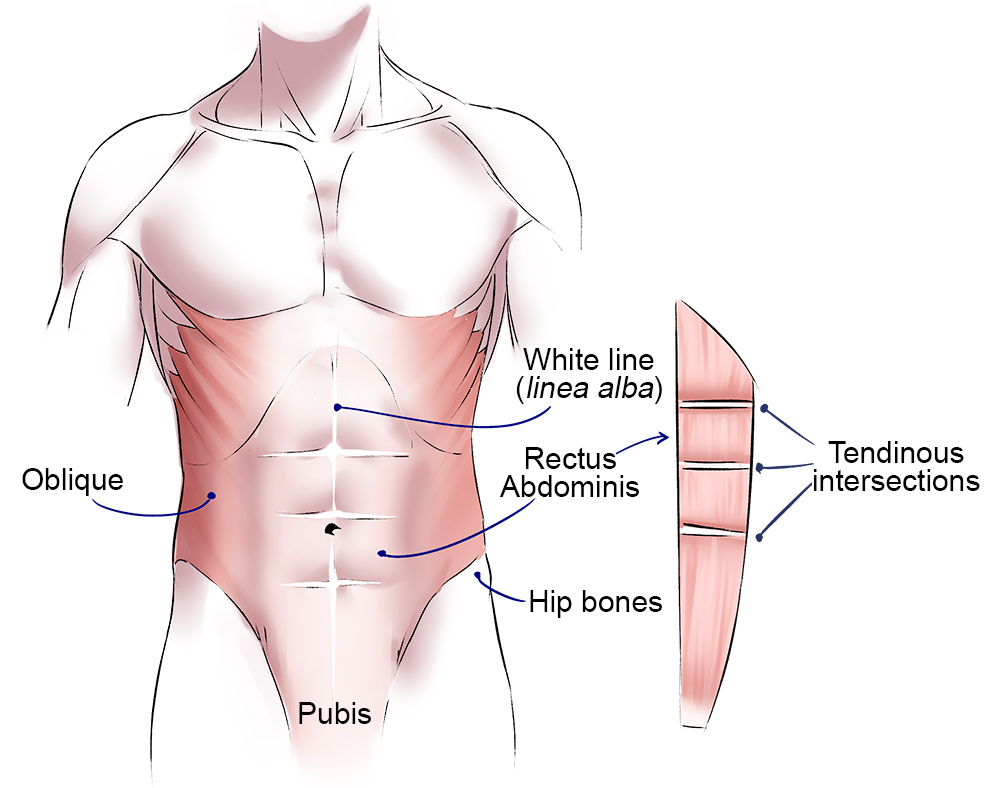
The linea alba (or white line) divides these muscles into two parts:
In the center, we can find the rectus abdominis muscle, beneath the arch of the ribs all the way to the pubis. Information technology has iii intersections that separate the muscle into 4 areas on each side.
The obliques are located to the sides and above the hip basic.
This side view shows how the muscles (dorsal, obliques and serratus anterior) intertwine to create a zig-zag line (A).
The Muscles of the Arms and Legs
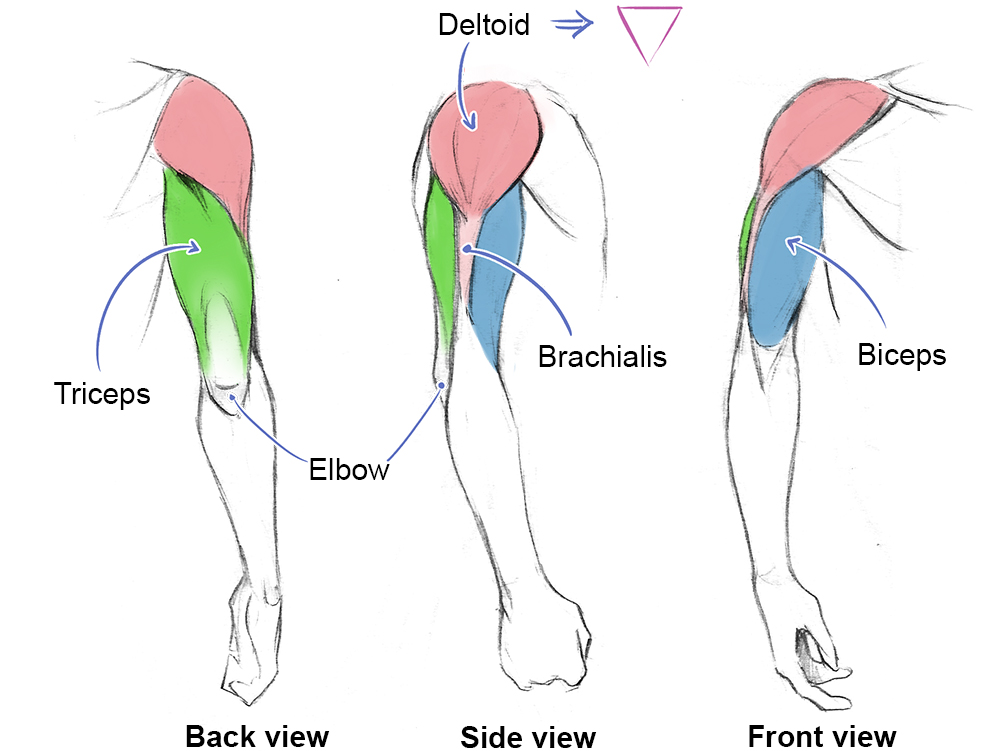
The deltoids cover the shoulder joints. These are thick muscles and are shaped similar upside-down triangles. The base is planted in the collarbone and inserts itself into the humerus.
Following the tip of the deltoid, nosotros observe the brachialis muscle. This musculus is pretty deep downward – I like to recollect of it as a divider between the biceps (located in the front), and the triceps (in the back).
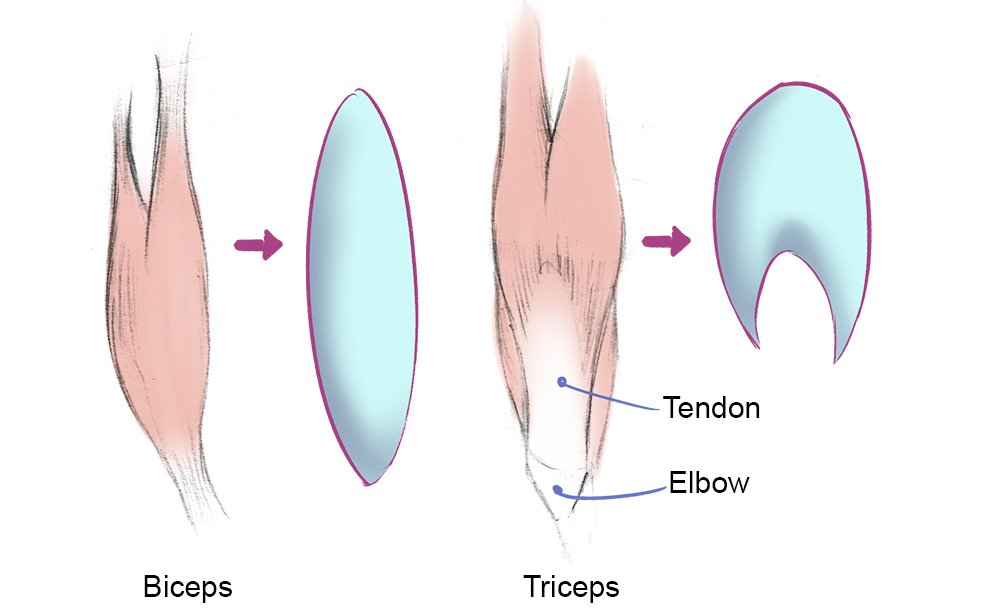
To simplify the biceps, depict a stretched oval. Y'all tin think of the thicker part of the triceps equally a horseshoe shape… or a croissant, or a crescent! The flat part of the triceps (the tendon) is connected to the elbow.
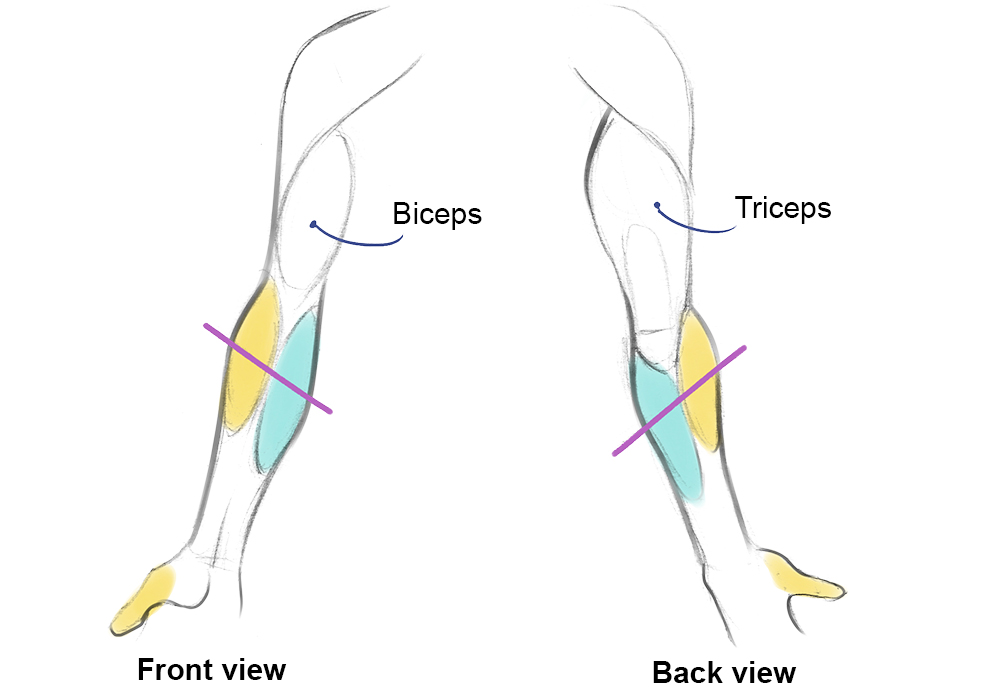
The muscles of the forearm provide mobility to the mitt and fingers. They are very similar to each other: very elongated, thin, and flat shapes; so drawing them can be a bit disruptive.
At that place are many, many ways to translate muscles, and it is OK to utilize whatever method that is piece of cake for yous to empathise. In the finish, it all depends on observation and practice to be able to draw with precision. For example, we tin can delineate the silhouette of the forearm with a couple of ovals. Due to the disproportion of the forearm, this oval on the same side as the pollex is slightly smaller, and information technology is located slightly above the other oval shape.
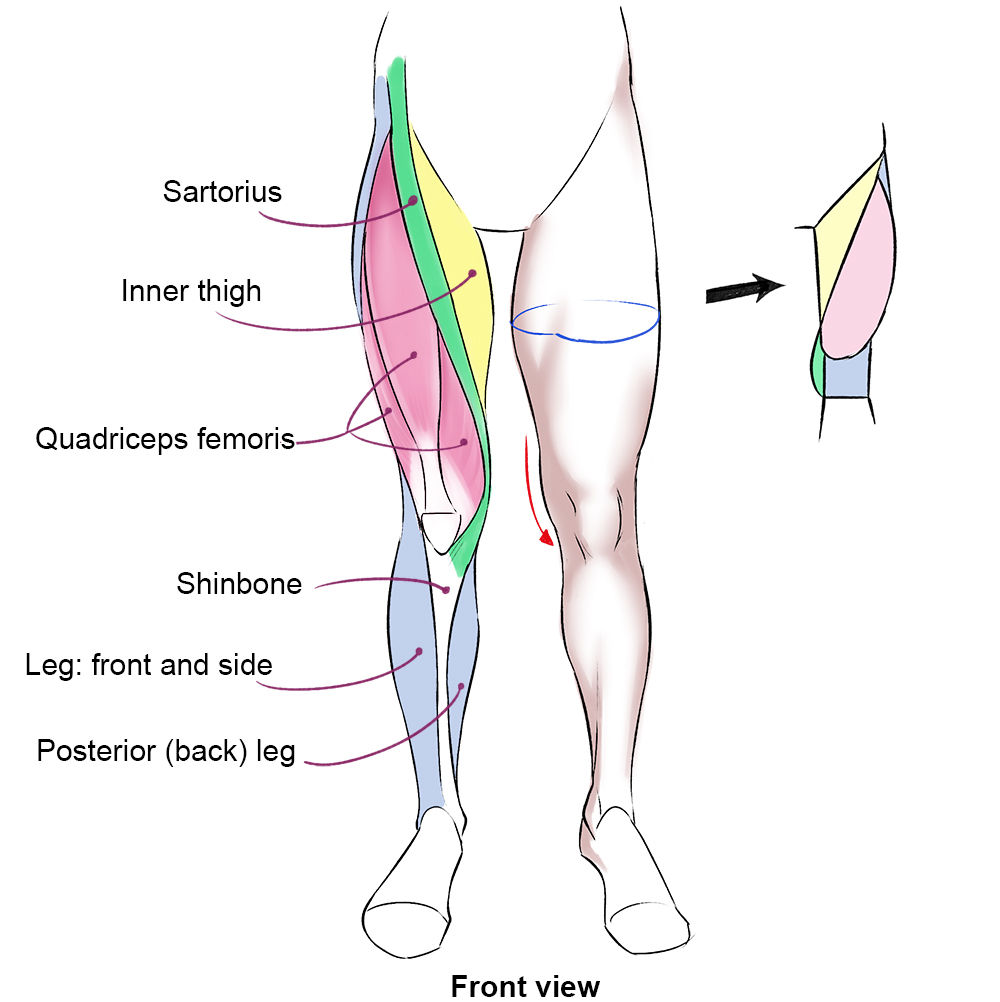
You will observe a like situation in the legs. Even though leg muscles are large and distinguishable, there is no demand to draw each one of them in detail – many of them tin be grouped together and drawn as a unproblematic figure. Carefully notice the outlines and shapes that the muscles create in the body to simplify them properly.
The sartorius muscle divides the leg with a diagonal line. Starting at the sacrum all the way to the inner side of the shin (slightly beneath the knee), this is the longest musculus in the human body.
The inner thigh is made upwards of several adductors, but y'all can group them all together and treat them only as a triangle.
The quadriceps consist of four individual muscles (one of them is non visible because information technology is located deep in the thigh) which all come together and join at the same tendon within the articulatio genus. Equally a whole, they are shaped similar a teardrop.
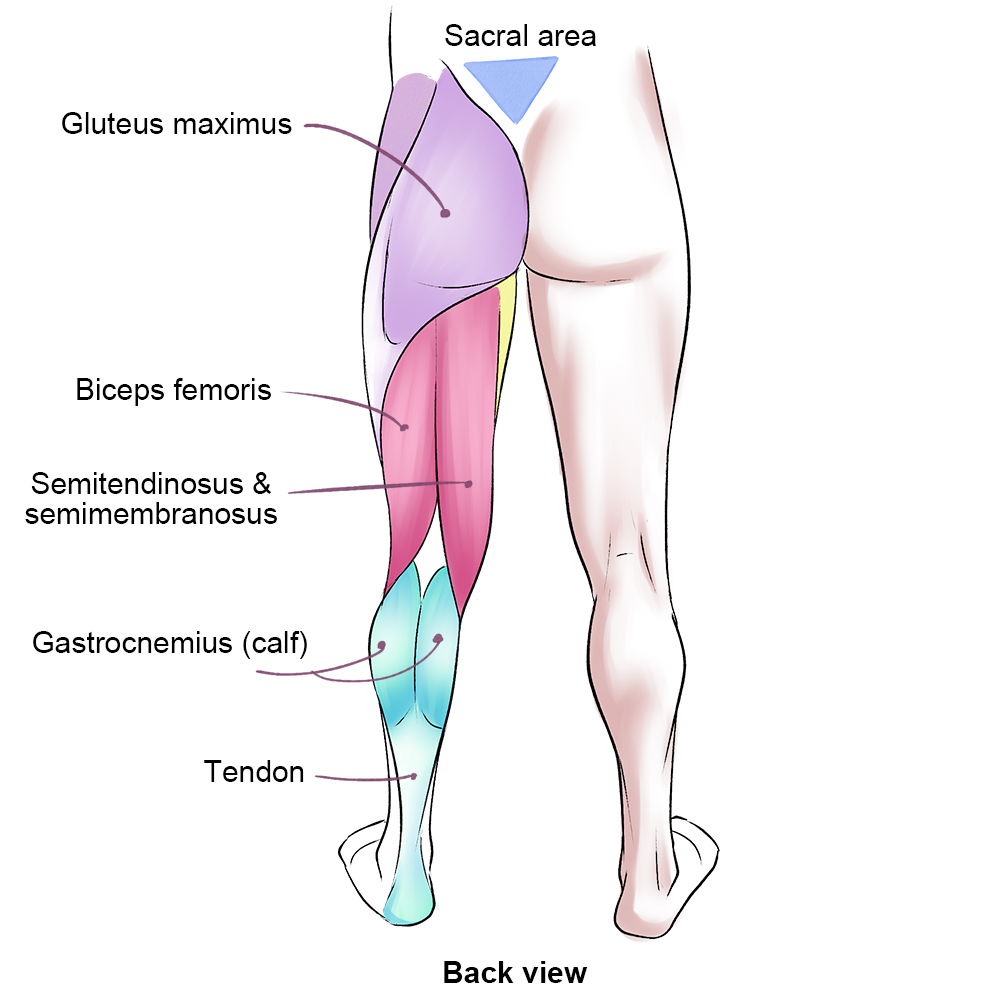
The shape of the calf is mostly defined by the two calf muscles, which are on the back of the leg and go into the heel. The front and sides of the leg are made upward of other muscles and tendons that permit the toes to move.
I take grouped together the biceps femoris, semitendinosus and semimembranosus every bit a single shape forth the thigh. This shape is divided in two, leaving a diamond shaped pit in the back of the knee.
When cartoon, shading will help y'all mark the muscles without the need to utilise lots and lots of lines to marker them out. Ideally, attempt to highlight the muscle that exerts the most strength in each pose, not all of them at in one case. Otherwise, the drawing volition look exaggerated. Unless that's what you're going for!
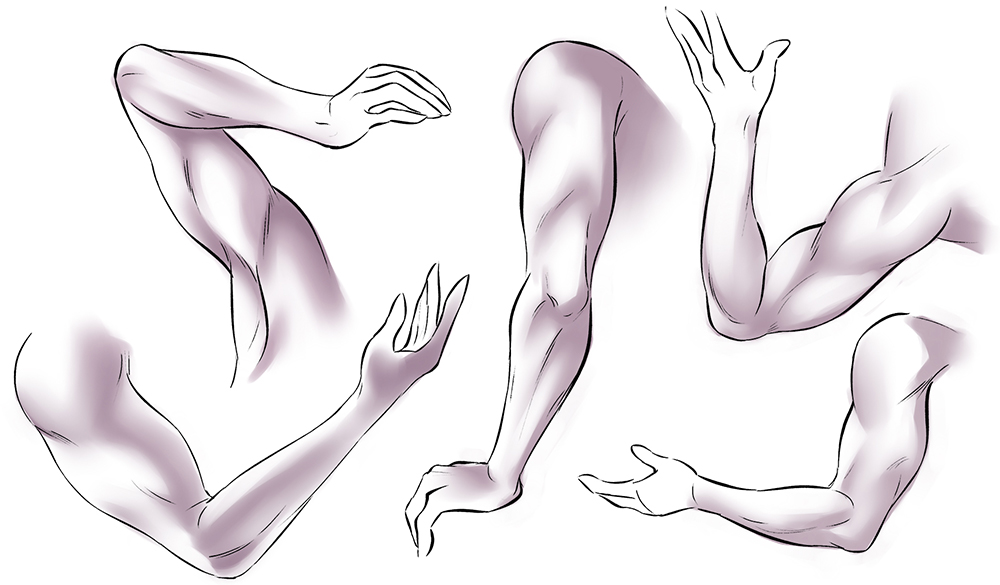
Accept a skillful await at your references, try to imitate the poses you see to get a better understanding of them. Which body part is bending? Which office is stretching?
I hope this guide was helpful to you. If you like, you can visit me on social media and bank check out my portfolio to come across more of my piece of work:
https://world wide web.instagram.com/eri_duh/
https://twitter.com/eri_duh
https://world wide web.artstation.com/eridey
Cheers for reading!
– Eridey

Source: https://www.clipstudio.net/how-to-draw/archives/162629
Posted by: uptongramemptere.blogspot.com
0 Response to "How To Draw A Human Base"
Post a Comment